Road to Green Köln 2026: Why the Real Bottleneck in Existing Buildings is Financing
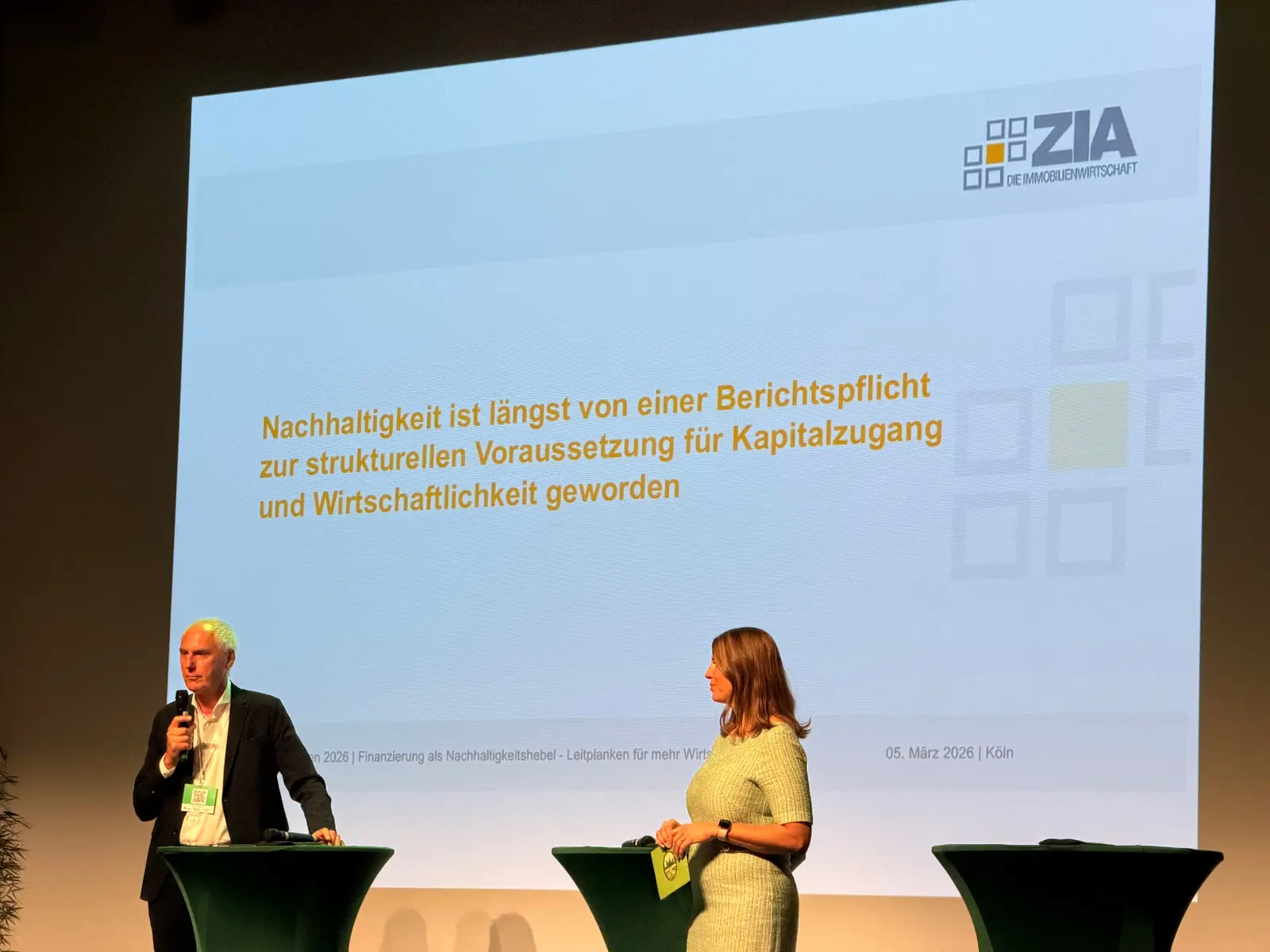
The Road to Green congress 2026 made one central truth about the transformation of the German building stock visible: the bottleneck is not technology. The bottleneck is financing.
 Managing Director & CEO, NEXA Horizons · Infrastructure Financing Platform · LinkedIn ↗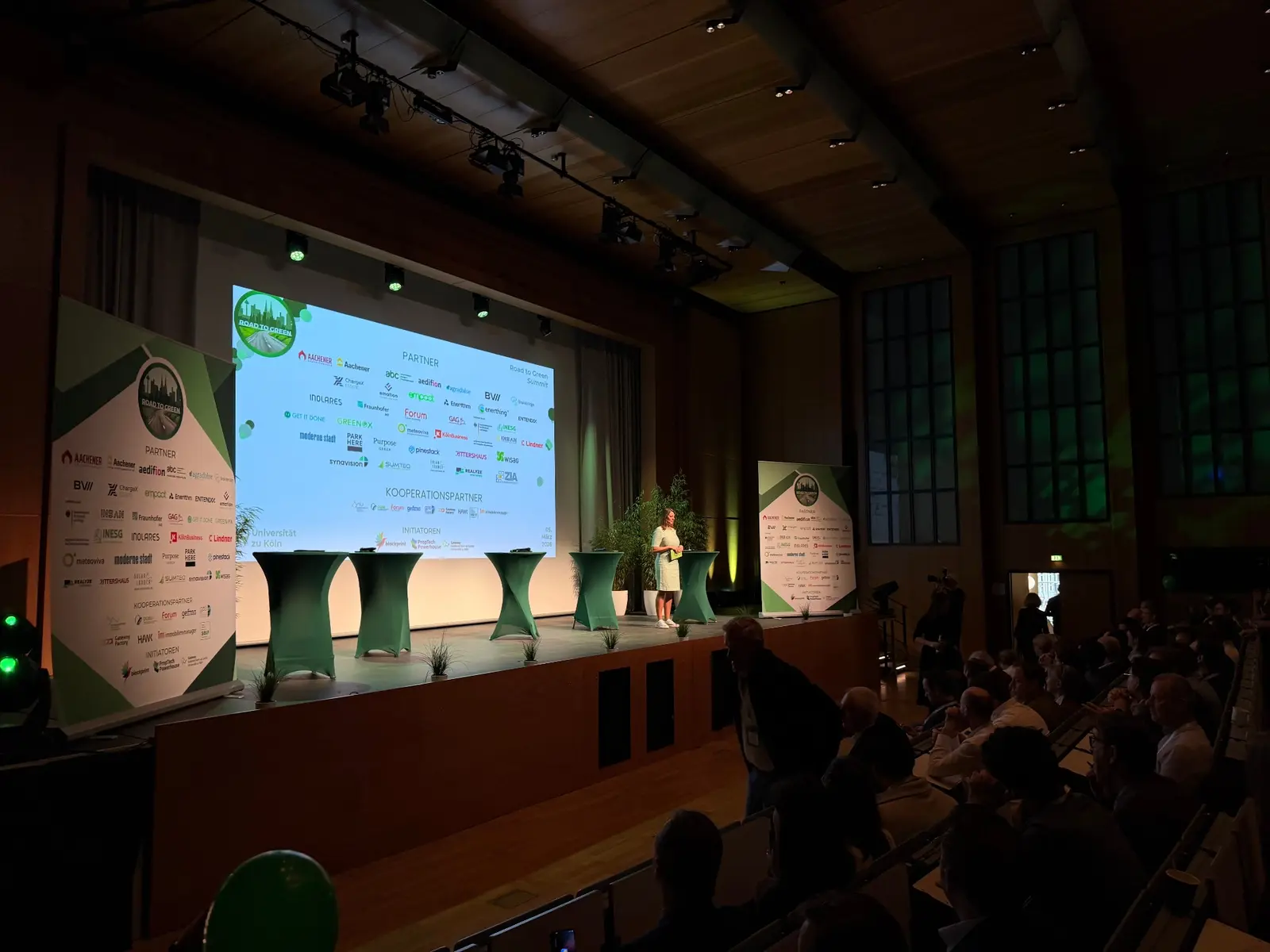
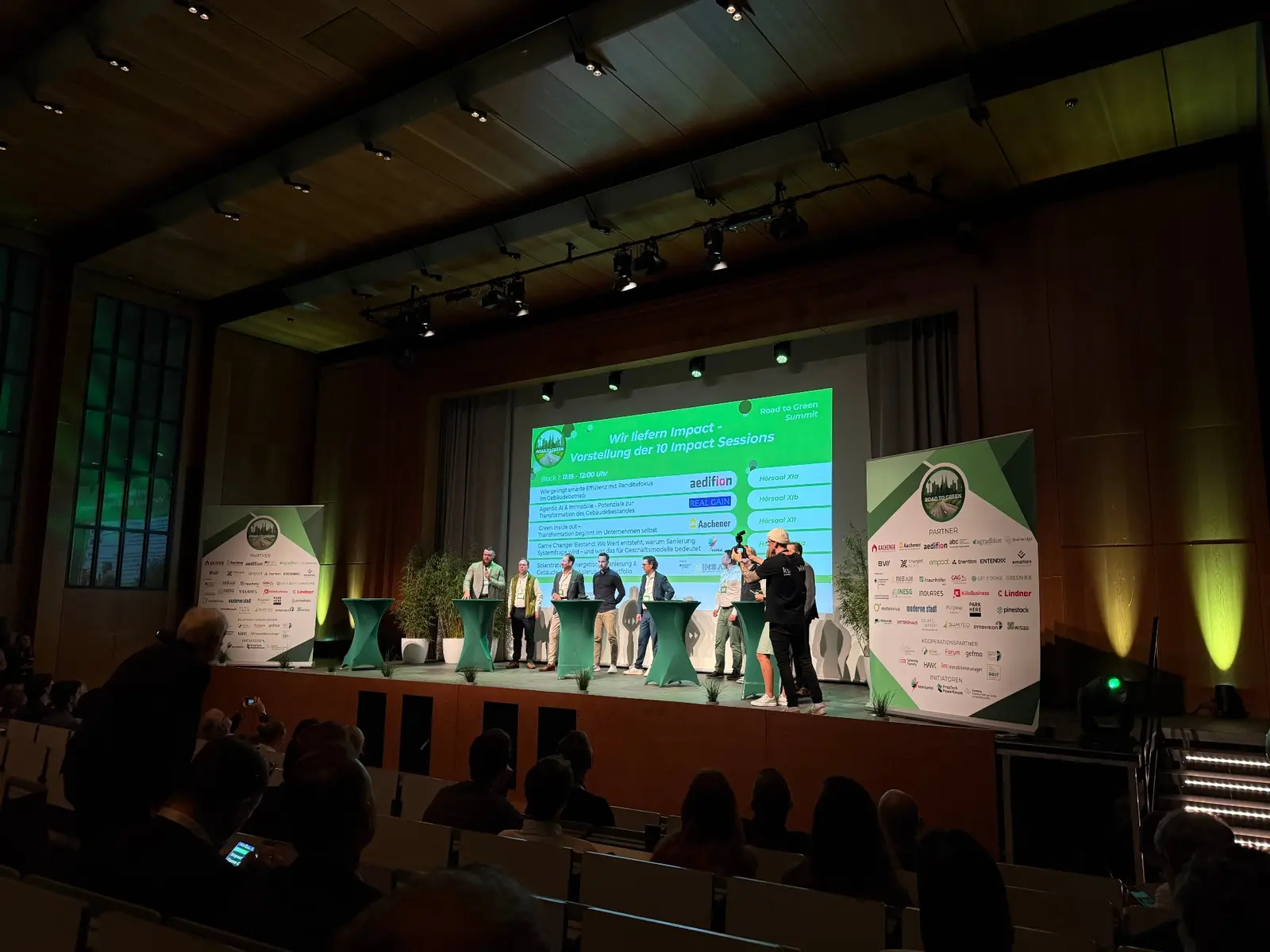
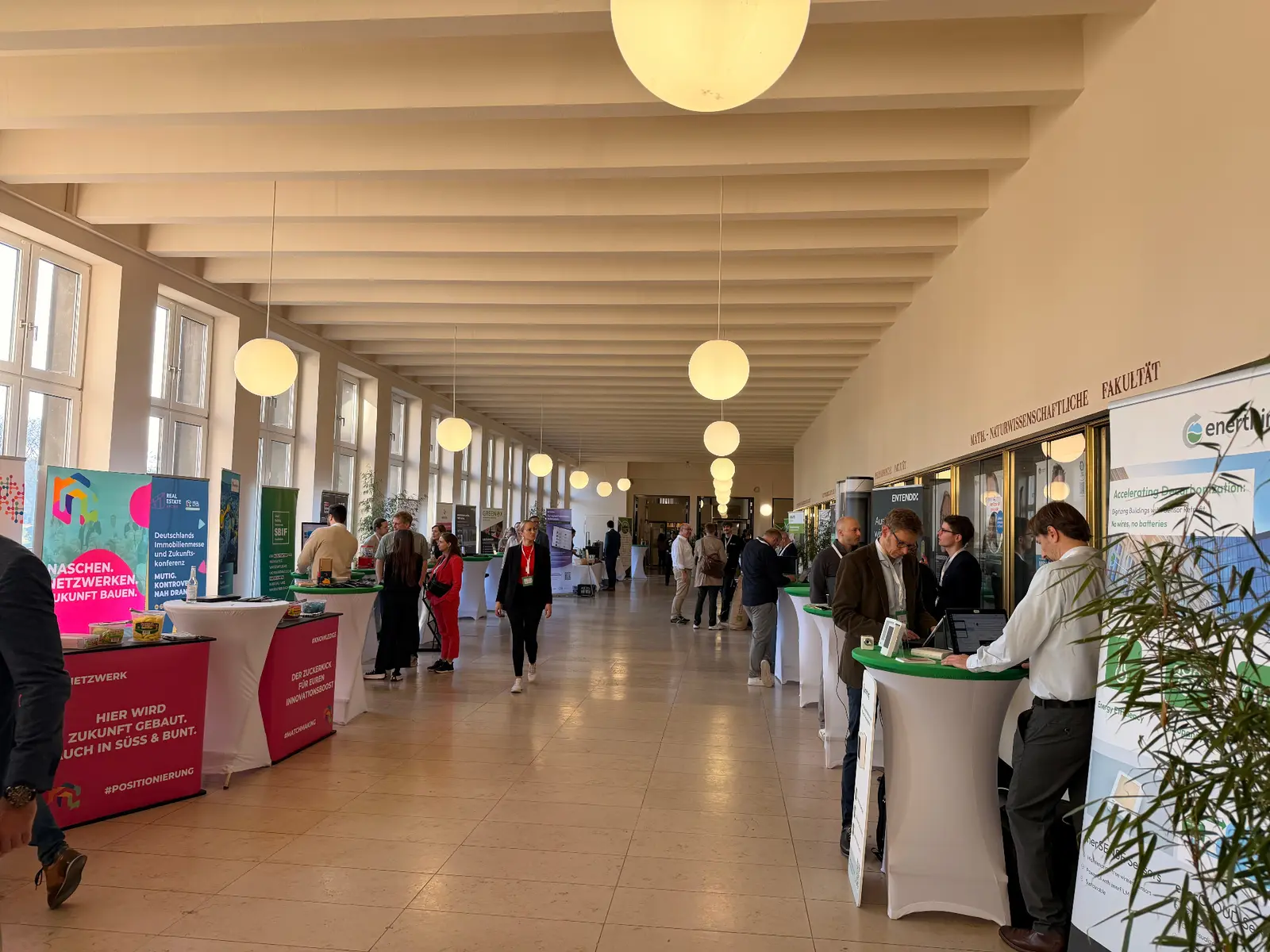
The Road to Green congress 2026 made one central truth about the transformation of the German building stock visible: the bottleneck is not technology. The bottleneck is financing. Around 500 representatives from real estate, construction, science, the PropTech ecosystem, urban development, and investment met on 5 March 2026 at the University of Cologne. NEXA Horizons was on site, spoke with engineering partners and PropTech providers, and takes away three clear insights.
What the Road to Green congress 2026 was
Road to Green is, according to the organizer, "the summit on the transformation of existing real estate." The event ran on 5 March 2026 from 9:00 to 18:00 at the University of Cologne, Albertus-Magnus-Platz.
The event brought together:
- Around 500 participants from real estate, construction, science, the PropTech ecosystem, urban development, and investment
- Representatives of the City of Cologne, KölnBusiness GmbH, and moderne stadt GmbH
- Keynotes, impulses, panels, and interactive workshops
- The first-ever Road to Green Award for market-ready PropTech solutions for sustainable district development (assessed against the Deutzer-Hafen project)
The goal was an insight and outcome paper plus a closing agreement among participants on the joint transformation of existing real estate. Cologne and NRW explicitly position themselves as an innovation location for green real-estate transformation.
Why existing stock is harder than new build
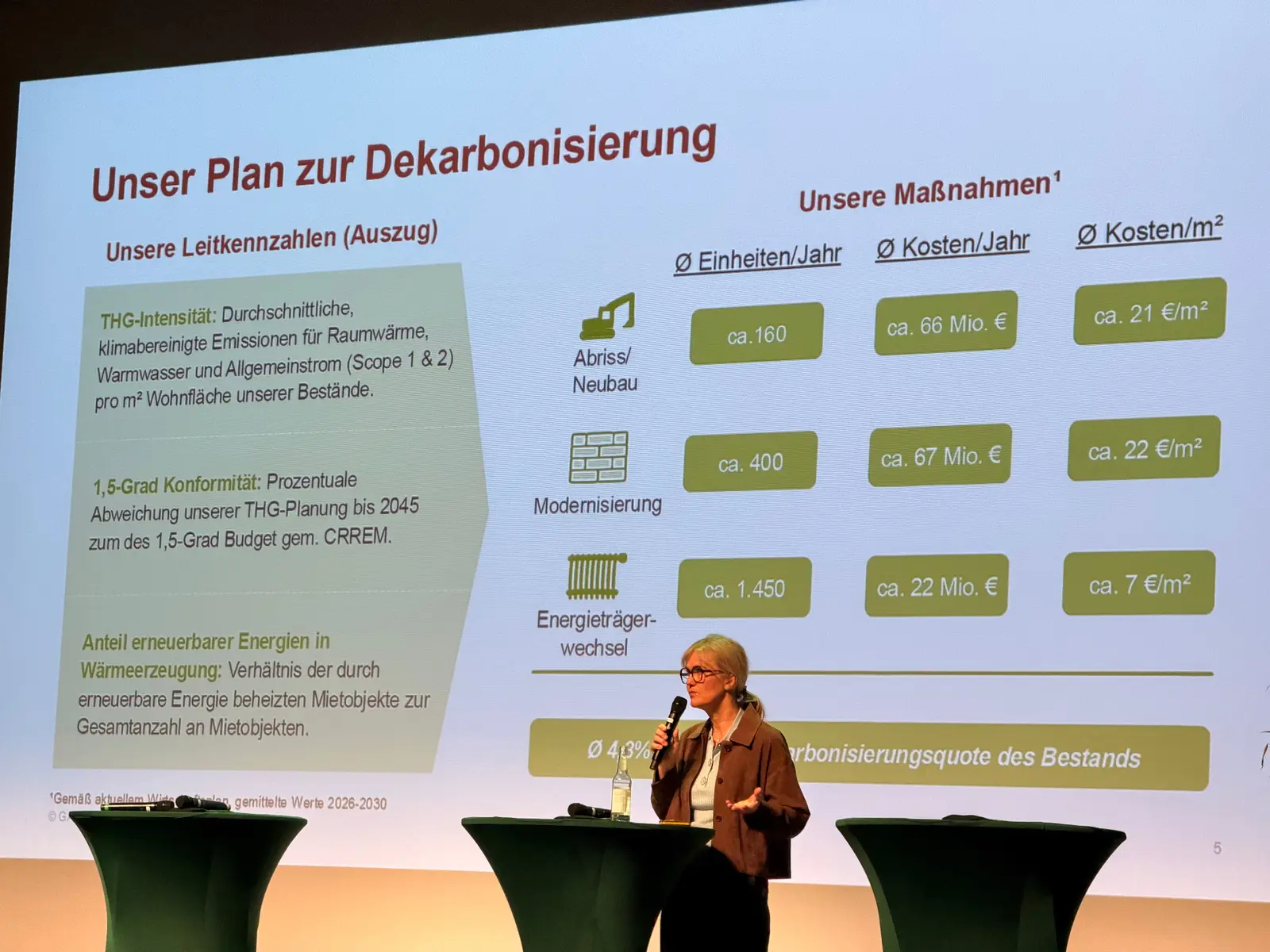
In new builds, energy infrastructure, PV, storage, and smart-building technology can be cleanly planned in. It gets harder in existing buildings. The question of how the German building stock can be made future-proof, resilient, and sustainably valuable is open in 2026 — and the answers are often capital-stranded, not technically stranded.
Concretely: in a typical existing property — whether a 1960s apartment block, a 1990s commercial building, or a district building under renovation — the technical measures are usually clear: insulation, PV, heat pump, possibly BESS, charging infrastructure, smart control. What is not clear:
- Who bears the CAPEX?
- Who carries the performance risk?
- How is the measure reported on the balance sheet and ESG-compliant?
- How is the benefit distributed between owner, tenants, and investors?
These questions are not resolved in the engineering studio. They are resolved in the financing structure.
Highlight conversations on site
On site we spoke intensively with our engineering partners and with other market players:
ABC Lösungen — engineering partner
We had a long conversation at the booth with ABC Lösungen, one of our engineering partners for more complex existing-building projects. Consensus: anyone wanting to transform existing stock must think asset, financing, and operations together — otherwise the project stays on the slide.
Solarloader Köln
Solarloader from Cologne also exhibited — a local solar provider with a focus on district and commercial projects. The conversation confirmed that the EPC side is available in the market; what is missing is the downstream financing and operations layer.
Connection to the BRYCK ecosystem
Several of the recognized PropTech solutions come from the BRYCK environment — see our analysis of the NRW capital stack. The NRW axis Cologne-Essen-Düsseldorf thus bundles real-estate transformation, climate tech, and capital in a density rarely seen.
Where NEXA addresses this gap
NEXA's NEXA Zero model is built precisely for this gap.
How NEXA Zero works in existing buildings:
- Owner keeps the building and does not need to invest
- The roof use is secured contractually for 15–20 years, with the SPV as the contracting party
- NEXA structures the project and documents it for the capital side, vetted partners install PV and BESS
- NEXA orchestrates operations, maintenance, reporting in NEXA ONE
- Energy is delivered to the owner via PPA, at a fixed, predictable price
- The performance risk sits with the SPV, not with the owner; institutional capital partners finance it
For the owner this means:
- No investment
- No balance-sheet impact
- Predictable energy costs
- Fulfilment of ESG requirements
- Value uplift of the property without own effort
For the capital side it means:
- Long-duration asset with certified cashflows
- Standardized reporting layer via NEXA ONE
- Clearly defined asset pipeline
Mieterstrom in existing buildings: an observation from the congress
For multi-family houses, Mieterstrom (tenant power) was one of the most discussed models at the congress — locally generated power delivered directly to residents below the market price. Established providers such as Einhundert Energie, Solar Estate, or Polarstern serve this segment. NEXA's focus sits next to it: commercial existing buildings with a PPA to the owner, a cross-asset logic of PV and BESS, and institutional refinancing through structured SPVs.
Take-aways from the Road to Green congress 2026
- Cologne and NRW position themselves as a central innovation location for green real-estate transformation.
- PropTech and Infrastructure Financing must be thought together. A district software without a financing layer ends in a dashboard. A financing platform without data ends in Excel.
- NEXA Zero is a direct answer to the question of how existing stock becomes capital-ready — without forcing the owner to pre-finance.
- 500 conference participants = a significant pipeline opportunity if the right follow-up conversations happen.
TERMS IN THIS ARTICLE
FAQ
Talk to us.
Whether you're a Mittelstand operator, investor, engineering office or partner: we want to hear from you.
Get in touch